
Initial Disclosure: Funds managed by Bleecker Street are short Roblox (RBLX). Please see the full disclosure at the end of this report, which covers our future trading plans.
Key Points:
Roblox is a $39 billion gaming platform built on an audience of children. Over the past year, it rebuilt itself around two promises: that it knows how old nearly every user is, and that adult strangers can’t reach anyone under 16.
Roblox’s safety system depends on a one-time face scan. After that, Roblox trusts whoever has the account password. We bought 100 age-verified child accounts for $190.91 and logged into all of them from five countries in two hours. Roblox never asked us to verify again.
The accounts are easy to buy. We found nine marketplaces selling them, four of which carry more than 65,000 listings between them. Listings appeared within a week of the January 2026 age verification rollout. Roblox’s terms prohibit account sales, yet the market operates in the open.
A purchased 13-to-15-year-old account was able to loosen its own parental controls with an 8-year-old’s debit card before opening an unfiltered chat with a face-verified adult, something that Roblox states it doesn’t allow. Through accounts registered to minors, we found pornography, sexual “condo” games, and Nazi imagery.
The reset brought little safety, but it broke Roblox’s growth engine. Previously, kids found games and told friends in chat. Now, age bands isolate users into six different categories.
Our fresh panel data across 6.7 million accounts shows new active users down about 50% YoY in Q3, with no recovery in September. This summer’s biggest hit, Steal An Egg, drew 20 percentage points fewer of its players from new users than 2025’s hits did, and it faded faster.
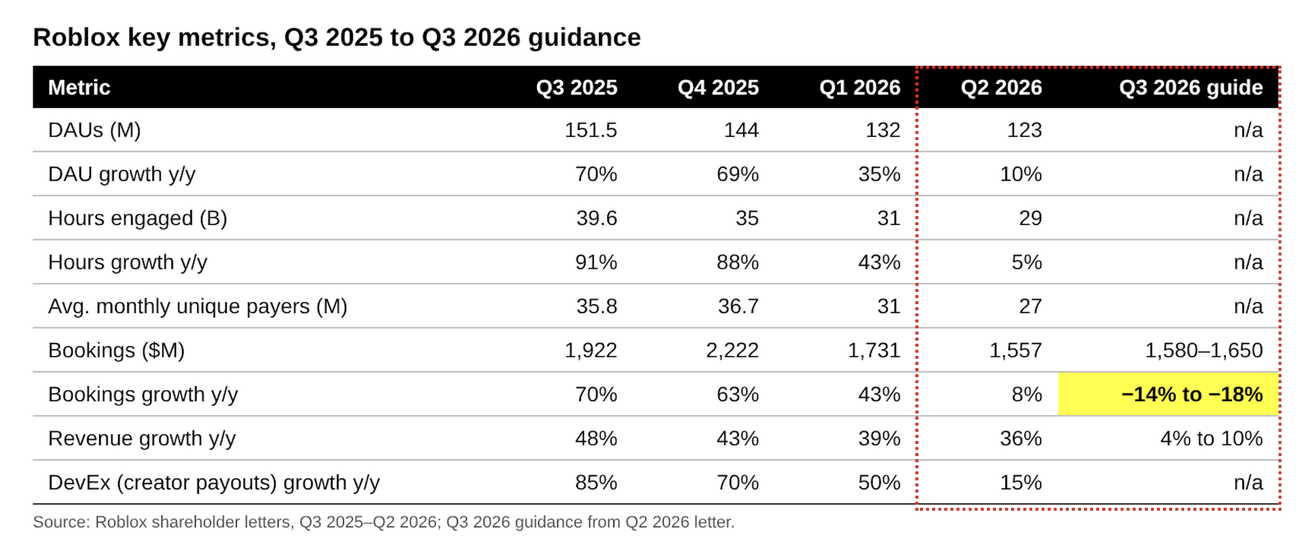
Roblox’s own numbers show the impact of an increasingly stale userbase. Daily users fell from 151.5 million to 123 million. Monthly payers fell from 36.7 million to 27 million in two quarters. Creator payout growth went from 85% to 15%. Q3 bookings are guided down 14% to 18%.
Bulls call the reset a regulatory moat. We think it is a liability: under state settlements, Roblox’s safety claims are obligations it will be unable to meet. Its hope for a cleaner growth story, adult gamers, strays too far from the core audience to make a meaningful difference, per one leading developer we interviewed.
The stock has recovered all of its post-Q2 loss, and the Street expects revenue to grow 12% again in 2027. We think Roblox is now structurally a smaller, slower, staler business with a safety promise it is not keeping.
Introduction
Roblox (RBLX) is a $39 billion gaming platform built on an audience of children. We believe it has become the prisoner of its failings. In October 2024, Hindenburg Research published a report titled “Roblox: Inflated Metrics for Wall Street and a Pedophile Hellscape for Kids.” Media investigations into child safety on the platform followed, along with lawsuits from state attorneys general and more than 100 federal cases. Roblox responded by rebuilding the platform around child safety. It made a facial age check mandatory for chat, sorted every user into one of six age bands, and walled off users under 16 from adults.
The rebuild has been expensive. In February, Roblox called the age-check rollout a manageable cost: “a mid-single-digit headwind to engagement growth and a low-single-digit headwind to bookings growth.” It guided full-year bookings growth of 22% to 26%. Eight months later, daily active users have fallen 19%, from 151.5 million in Q3 2025 to 123 million in Q2 2026. Monthly paying users are down 26% in two quarters, from 36.7 million to 27 million. Bookings growth has gone from 70% to a guided decline of 14% to 18% for Q3, Roblox’s first quarterly bookings decline since 2022.
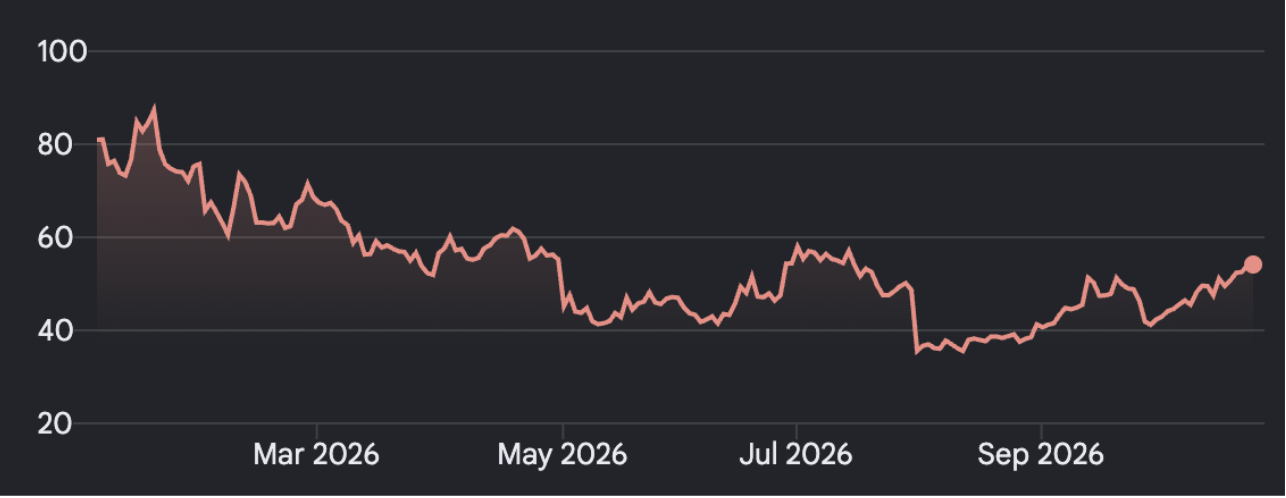
The market has reacted and then forgotten. In Q1, Roblox missed DAU estimates by nearly 12 million and cut full-year bookings guidance by about $950 million at the midpoint, blaming the age checks. The stock fell 18% the next day. In Q2, Roblox guided bookings down for Q3 and stopped giving full-year guidance. The stock fell 27% on July 31, its worst day as a public company. It has since recovered all of that loss. Roblox shares are 12% above where they closed before the Q2 earnings release and up 53% from the July 31 close."
Roblox stock appears to have priced in the reset as a one-time cost with a lasting payoff: a safer platform, a regulatory moat, and a clean base for growth among adults. Our research shows otherwise. The safety system doesn’t work, and the damage to Roblox’s growth engine looks permanent.
The age check runs once, when a user first unlocks chat. Afterwards, Roblox trusts whoever has the account password. There is a thriving market for such accounts: our investigators were able to identify nine such marketplaces with over 65,000 listings. Our investigators bought 100 accounts Roblox had verified as belonging to children, for $190.91 in total. Even after they logged into all of them from five countries in two hours, Roblox never asked them to verify again. Using one account registered to a 13-to-15-year-old, they approved its own parental controls with a debit card issued to a minor. This allowed the account to open unfiltered private chat with a face-verified adult. Nine months after the reset, we found a minor’s account could still find explicit content, Nazi imagery, and sexual “condo” games.
The reset failed to make the platform safe, but it did break how Roblox grows. Games used to spread through chat. Data we collected from 6.7 million accounts shows new active users down about 50% in Q3, and this summer’s biggest hit drew far fewer new players than last year’s hits did. Developers we spoke with at RDC26 did not share the sell side’s view that the business has bottomed.
The Street expects revenue to return to 12% growth in 2027. We think Roblox is now a smaller, slower business with a safety promise it cannot keep.
Roblox Shares Down 33% YTD, Have Fully Recovered Post Q2-Earnings Fall
Roblox’s Year of Child Safety
Between November 2025 and June 2026, Roblox rebuilt how children use its platform. It made a facial age check mandatory for chat, sorted every user into one of six age groups, and launched separate Kids and Select accounts for users under 16. It told parents the problem was solved, with management stating “we know what age everyone is.” Roblox proceeded to guide Q3 bookings down 14-18%, and the stock fell ~27% on July 31. There has been a tangible impact on virality and DAU’s on the platform, and we believe the reset has not worked.
Roblox announced its core changes in November 2025 and took them live globally in January 2026. Facial age estimation became mandatory for anyone who wanted to use chat. To chat with friends, or strangers, online, a user needs to point a camera at their face, while a Roblox vendor estimates an age.
Once the account age is estimated, it is placed into one of six bands: under 9, 9-12, 13-15,16-17, 18-20, and 21+. A user’s ability to chat is confined to a user’s own band and the bands adjacent to it. By default, an adult (21+ user) cannot message a user under the age of 16 at all. The exception is Trusted Connections, a feature that enables unfiltered cross-age chatting. Roblox claims that for Trusted Connections, a real-world relationship must be confirmed through a live QR-code scan.
Roblox moved kids under the age of 16 onto separate Kids and Select account types with their own defaults this June. The youngest cohort can only see a curated slice of the Roblox universe, less than 30,000 experiences (games) out of the millions on the platform.
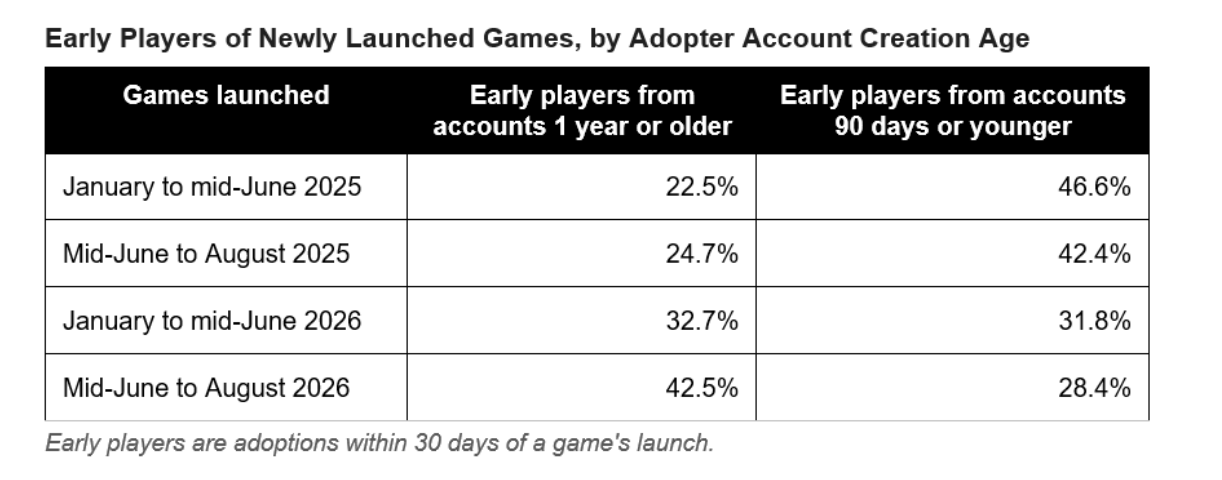
Under discovery changes that took place at the same time, under-16 players cannot see a new game until older players have played it, which can extend the time it takes for new games to get discovered.
Roblox has continued to iterate the safety mechanism this year. In August, Roblox shared a blog post titled Beyond the Selfie, in which they announced the addition of a behavioral machine learning layer that they say evaluates a user’s ongoing behavior and checks to see if it still matches its estimated age over time. Roblox specifically called out sibling handoffs as something this was trying to prevent.
Management and the bulls call this a one-time cost with a long-term payoff. In their view, Roblox moved first, paid a one-time price, and now holds a regulatory moat and a best-in-class safety claim that rivals will have to match.
Roblox management has been vocal about the investment in safety, claiming that they are leading the world in creating a secure environment for children. Our research found that Roblox’s safeguards are full of holes:
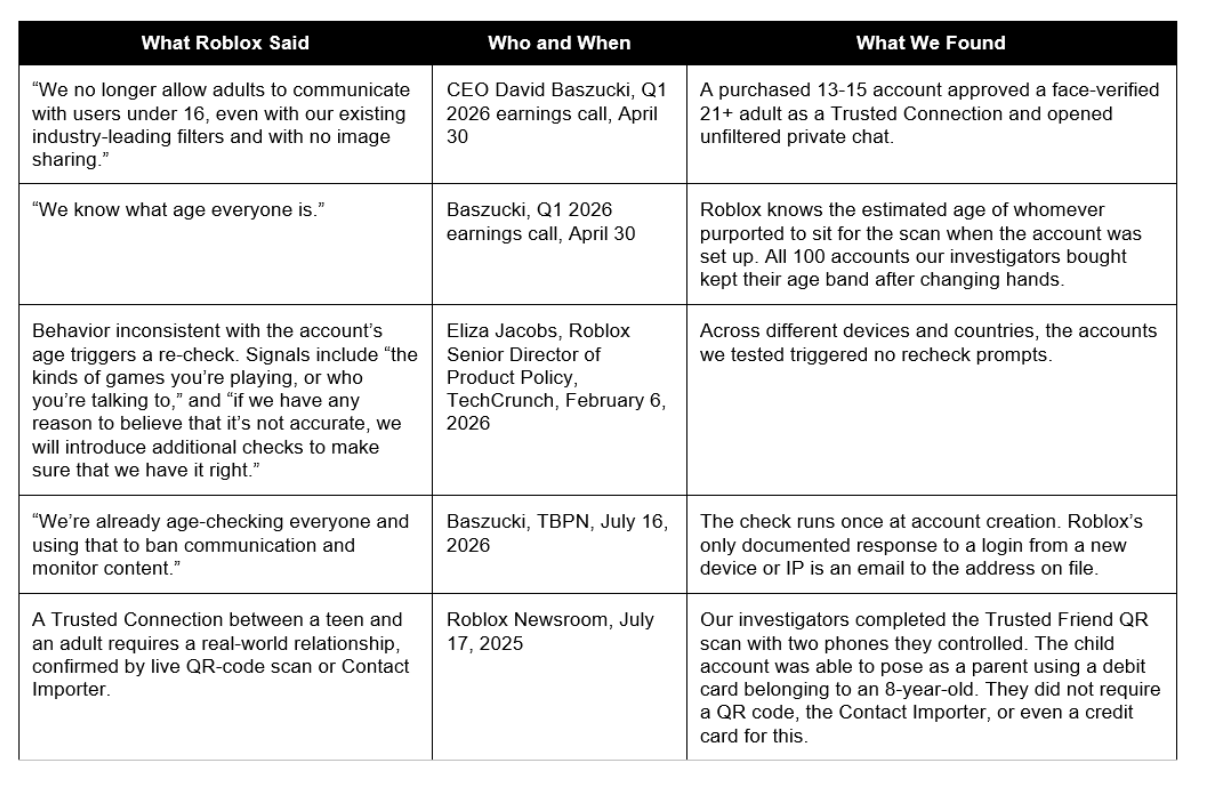
The Roblox Bull Case Is Built On Child Safety Being Successful. It Is Not.
The bulls argue that the business decline this year is a timing issue and that Roblox is building a regulatory moat. Roblox, for its part, also says it addressed the safety problem proactively and is paying the cost for the fix upfront.
Management has called the reset an investment, not a setback. In October 2025, CEO David Baszucki stated, “We believe this initiative will establish a best in class standard for communication safety on social media and communications platforms.” On the Q1 2026 call, Baszucki said Roblox had become “the first large online gaming platform to introduce age checks to access chat on a global basis,” and that these “proactive measures are setting a new industry benchmark.”
At times, management has gone even further, saying that safety is a forward-thinking expansion strategy rather than a cost. “Our growth is all driven by word of mouth… When we look at that, safety is something that’s a real growth driver for the company,” Chief Safety Officer Matt Kaufman said in January. “We’re not waiting for the law or for the device manufacturers to do that”, Baszucki stated in July. Five states have settled for about $54 million in total, which bulls see as manageable, and the settlements now require the controls Roblox already built. Any rival that wants to reach children will have to build the same thing, with the accompanying cost and scrutiny.
Bulls also view weak bookings as a separate, deliberate tradeoff after Roblox changed its discovery system to favor more retentive games.
Alongside the safety reset, Roblox has emphasized the 18+ age group. Roblox is targeting 10% of the $200 billion global gaming market. Adults are most of that market, and Roblox reaches fewer than 10% of US 18-to-34-year-olds today. Baszucki says US adults spend more than 1.5 times as much as under-18s. Because Roblox now knows which users are adults, the company contends, it was able to raise creator payouts on adult spending from 26.6% to 37.8% and sell advertising against verified ages. “What made this possible,” Baszucki said on the Q1 2026 earnings call, “is age check.”
Our research conducted since July 2026 shows that Roblox’s safety reset did not actually do much to improve the safety of the platform. Over the course of the second half of the year, we were readily able to find:
Easy mechanisms for adults and children to reach each other by circumventing Roblox’s own safeguards. A purchased 13-15 year old’s account was able to approve its own parental controls.
Pornography, Nazi imagery, and sexually explicit avatars and behavior in a minor-approved game setting.
Sexual “condo” games appear to be surviving a stated platform ban.
Roblox policy says that adults cannot enter trusted (unfiltered) chats with children under 16 without real-world contact or parental approval. Our tests show that is not true.
Roblox previously grew by word of mouth: a kid found a game, told friends in chat, and the game spread. Now that chat has been curtailed, that channel is gone. New games also can’t reach under-16s by default until older players have played them first. Roblox admits this “can lengthen the time it takes for new games without an existing audience to grow.”
The results already appear plainly in Roblox’s numbers. Hit games still break out, but they no longer last. Escape Tsunami for Brainrots peaked above 500,000 players in January and was gone from Roblox’s charts within seven months. In March, management said Roblox was not a business that depends on hits. Four months later, it guided Q3 bookings down 14-18% and blamed the lack of hit-level spending.
Daily users are down from 151.5 million at the peak to 123 million. Daily paying users fell from 1.9 million to 1.6 million in one quarter, and spending per user is falling. Revenue is still growing only because Roblox spreads past sales over time; bookings, the money coming in today, are guided down. Creator payouts went from growing 85% a year to 15% in less than a year.
The adult market Roblox hopes to pursue is also an unclear classification. Roblox’s “18+” users are defined by an age check that can be bought and sold for a couple dollars, so neither Roblox, nor its investors, nor its advertisers can be sure who is in which group.
And Roblox’s recovery plan has no good outcome. Roblox wants to bring engagement back by letting parents approve more chat. Children can sidestep these approvals, as our tests show, which means an engagement recovery would bring back the same kind of potential predatory adult-child contact Roblox told parents was gone.
Roblox’s Safety Measures Did Not Do Enough, and Acute Issues Persist
Roblox’s core change was announced in November 2025 and went live globally in January 2026, making facial age estimation mandatory in order to use any chat feature. Users are now sorted into six bands: under 9, 9-12, 13-15, 16-17, 18-20, and 21+. They can only chat within their own or adjacent bands. Roblox says that adults cannot chat with under-16s by default. “Trusted Friends” are the exception, and such on-platform friendships supposedly require a real-world link, QR code, or other real-life contact. These safeguards did not, per our findings, stop the catalysts for unsafe behavior on the platform.
Roblox’s stated reason for the safety redesign was that “as this technology became available and accurate enough to use in this way, we wanted to utilize it.” In reality, the change came on the heels of mounting pressure, after Hindenburg Research highlighted apparent DAU inflation and predator issues. There have also been mounting legal threats: ten states attorneys general have sued Roblox, and there is a multi-district litigation in the Northern District of California, MDL 3166, filed in December 2025. The safety push seems to us more like a litigation defense mechanism.
Roblox has paid a steep cost for its changes. In Q1 2026, DAUs came in at 132 million against a 143.8 million forecast. Guidance got cut by about $950 million in bookings, and the stock fell 18% the next day. Q2 DAUs were 123 million, which were up YoY but down sequentially, and came ahead of Roblox lapping two viral hits from the second half of 2025. And the stock has suffered, falling 33% YTD. But Roblox still trades at roughly 5.5x bookings and 40x this year’s expected free cash flow, a growth multiple on a stock that has guided to its first bookings decline since 2022.
The market currently expects that this will be a one-year problem for Roblox. Consensus is for Roblox to return to revenue growth of 12% in 2027 and accelerate to 17% in 2028. Meanwhile, Roblox just guided for bookings to fall 14-18% in Q3, and didn’t give guidance for Q4. This is also the period where Roblox is supposed to reach profitability: consensus numbers still have Roblox losing roughly $900 million in 2027 and $800 million in 2028, while Roblox’s own Q3 guide calls for Adjusted EBITDA of zero to $41 million and roughly breakeven free cash flow. In May, Roblox was guiding to more than $1 billion of free cash flow for the year. Analysts still remain constructive on the name. Short interest is only ~4% of the float.
Our research suggests that investors’ assumptions about Roblox’s path forward are built on faulty understanding of what the platform has become today. We bought age-checked child accounts on the open market for as little as $1.54 and logged into every one. Roblox never asked us to verify again, even across new devices, new countries, and VPNs. Using one of those accounts, a “13-year-old” approved its own parental controls with an 8-year old’s debit card and opened an unfiltered private chat with a face-verified adult. Roblox’s own prompts walked the user through the steps.
Meanwhile, the extreme content that Roblox is supposedly moderating was still easily accessible and easy to reach.
Roblox paid for this new safety system in growth, costing it word-of-mouth virality and guaranteeing a slower path for new games, as our data analysis of 6.7mn Roblox accounts shows. We don’t believe this safety reset has created a meaningful moat; rather, it appears that Roblox has permanently impaired virality and user sign-ups on the platform.
Roblox’s Platform Remains Rife with Issues It Claim to Have Expunged
It appears to us that Roblox’s safety architecture rests on a single flawed point: that the person who passes the face scan is the person holding the account. We tested it, and we were able to bypass it in less than a minute for $1.54.
We identified nine marketplaces that carried a Roblox account category, four of them showing more than 65,000 active listings between them. Lolzteam, a Russian-language exchange, has a purpose-built "age confirmed" filter that returns 3,282 listings and a mass-upload tool for sellers. PlayerUp shows 37,480. One seller on a site called Eldorado.gg lists 52 accounts across every age band, with some marketed as, for example, "GIRL SKIN | 9-12 Age."
On August 24, a researcher searched “Age 5” on Eldorado.gg, filtered for “Age Verified: Yes” and bought an account Roblox’s systems had certified as belonging to a five-year old. After the seller delivered the login email and Roblox “verified” with a one-time code, the researcher was able to log in as a five-year-old.
Our researchers purchased 100 accounts across age bands for $190.91 in total between August and October. All one hundred were able to log in. Zero required reverification. The protections were minimal: for example, our researcher accessed one account aged 13-15 from a New Jersey VPN with no issues despite the account’s location being Kazakhstan. Each account showed the checked age badge to other users.
The age controls leave significant safety vulnerabilities in place, such as the Trusted Friend feature, which appears easily circumvented. Roblox's help center says teens "cannot create a Trusted Friend with an adult unless using real-life connection methods like live QR code scanning and contact importing." Even for under-13 users, a parent is supposed to either create an account and age-verify, or offer a government ID or credit card to enable Trusted Friend adds:
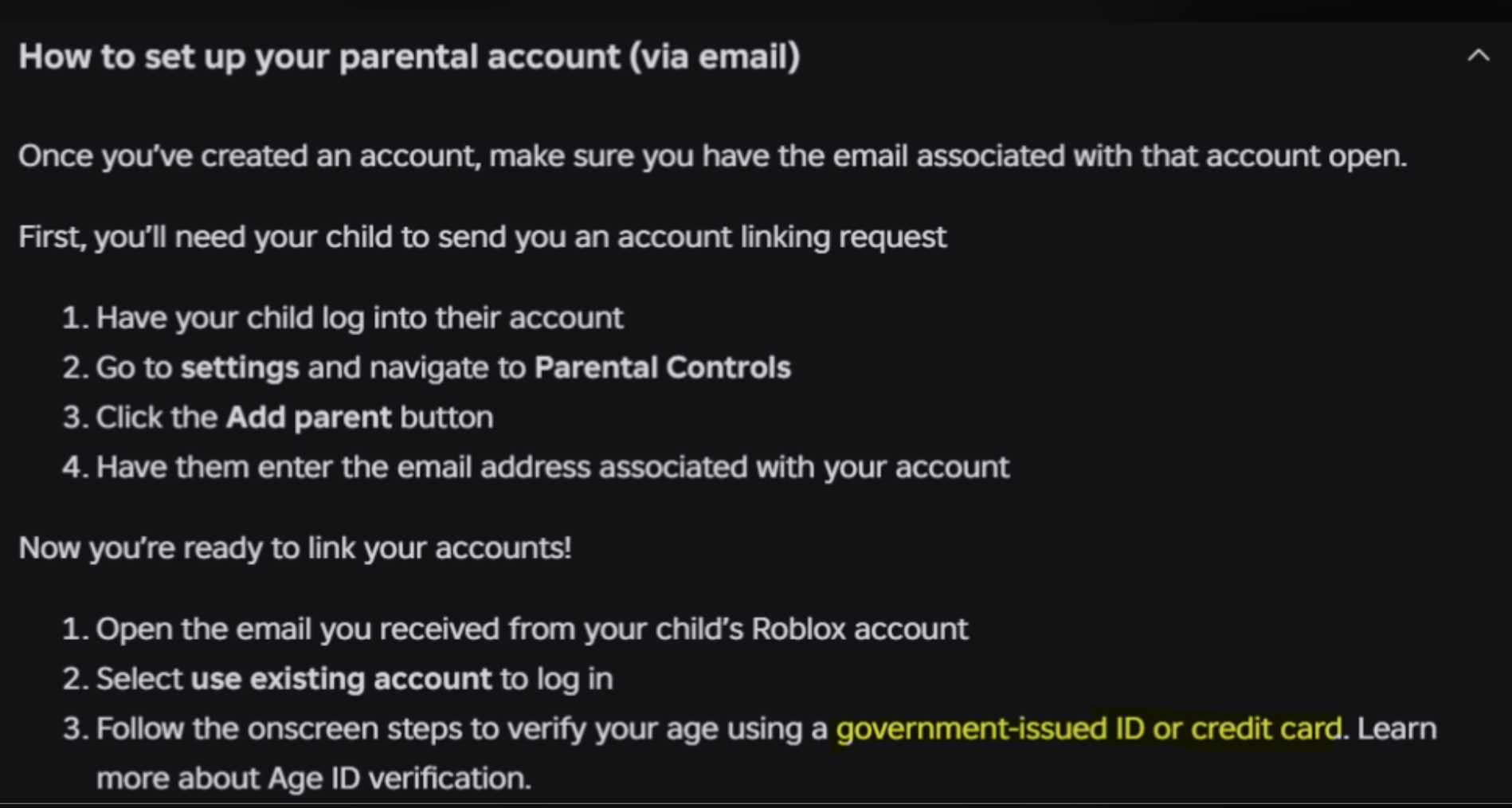
This was not the case. A researcher’s face-verified 21+ account sent a friend request to the purchased 13-year-old account. The chat was at first locked, as designed. The 13-year-old account then opened Parental Controls, entered an email address it controlled and keyed in a debit card belonging to an eight-year-old, and approved the adult as a Trusted Friend. Roblox sent a $1.00 authorization to the card and accepted it as proof of a parent. No ID, name match, or address match was required; the account was in Romania and the "parent" was on a Memphis VPN.
Roblox says it has “zero tolerance” for sexual content, extremism, and the glorification of real-world violence. It says its youngest users see only “our most popular, highest quality content.” Nine months into the safety reset, none of that is holding up.
“Condo” games are sexual roleplay experiences, and Roblox’s Community Standards ban them. Roblox previously told CBC News in 2022 that condo games are taken down “typically within a matter of minutes.” The people running them have simply built around that. Playcondogames.com is an off-platform hub that routes players into condo games on Roblox. It links to two game passes that appear to have been sold on Roblox’s own marketplace, numbers 828173480 and 828237346, marketed as condo “Ranks.” Any Robux that would have been received from these passes would flow to an account created in May 2024 that was still active as of October 2026, and Roblox would have kept its usual 30% cut of every sale. The site advertises “Auto Uploads 24/7” and promises buyers that “your game will regenerate automatically” whenever Roblox removes it. In other words, the takedowns Roblox tout are a known cost of doing business for the condo game operators, and Roblox is still collecting its share of any condo passes.
We also found a disturbing “dating” feature called RoConnections on Playcondogames that contained clear minor / child predator profiles. A video of the “dating” cards, of which the below is a screenshot, is linked in a repository here.
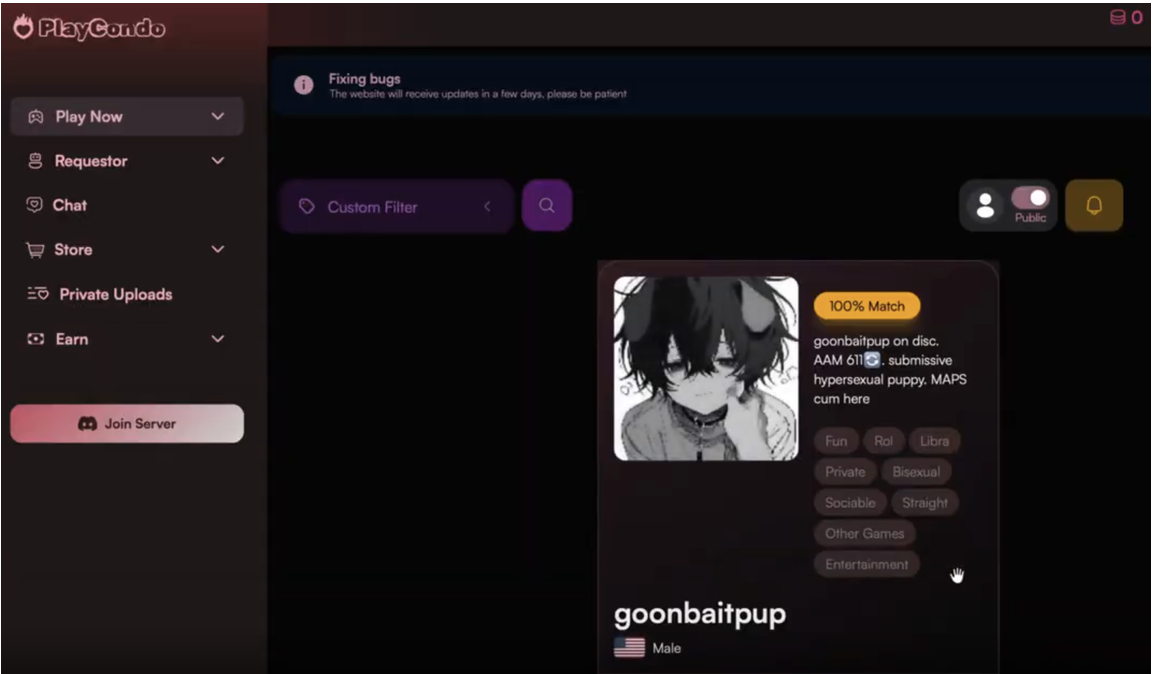
MAP stands for “minor-attracted person,” a label pedophiles use for themselves.
The sexual content doesn’t stop at condo games. Inside one Roblox hangout, our investigators found walls lined with pornographic images. We have censored them in the report, but less censored files can be accessed in our repository.


Avatars are being used the same way. On October 21, our investigators recorded a modified male avatar simulating a sexual assault on another player’s avatar inside the same Roblox game.
Then there are the people. As one example, in August, seven months after the age checks went live, an account called @older_26yoo joined Roblox. Its bio reads: “Atraction is not wronnggg / lets be friends, im a bitMAP / EVERY pAGE WELCOME!”
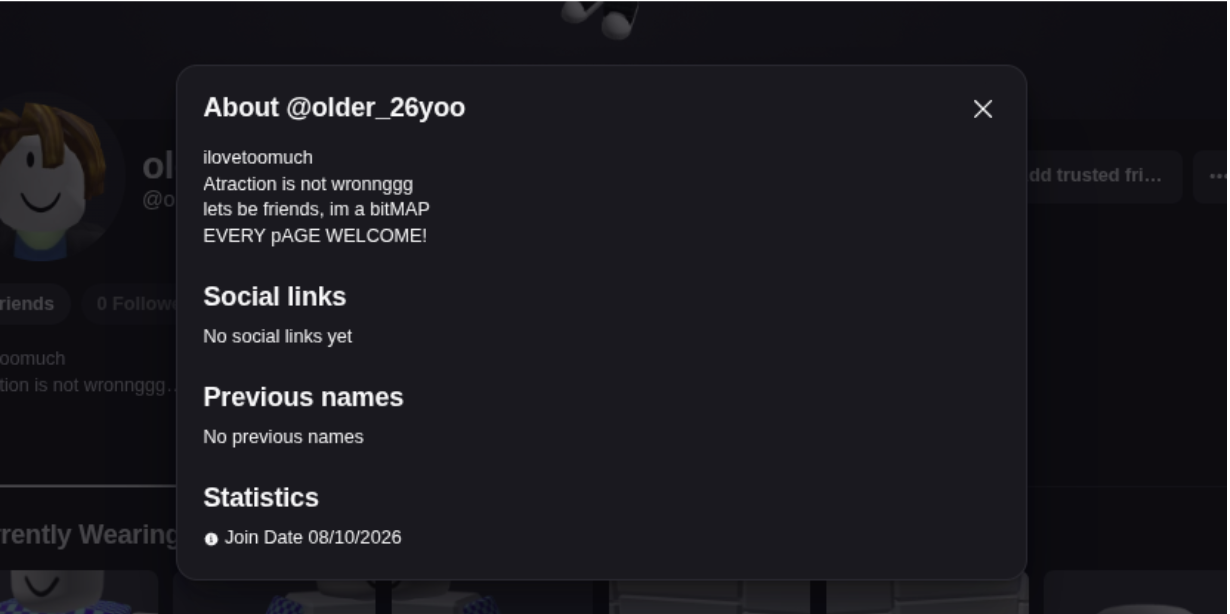
When our investigators found the profile on October 10, it was live, with an “Add trusted friend” button sitting next to it. As of writing, the profile remains live.
The Engine Behind the 2025 Viral Wave Is Scrapped
The 2025 spike was extraordinary: Roblox concurrent players went from 10.6M (Q3 2024) to 47.4M (August 2025), with Grow a Garden at 21.3M and Steal a Brainrot at 25.4M, spread by developer drama on Twitter and Discord, TikTok and YouTube clips, and schoolyard word of mouth among under-13s. It appears that Roblox cannot manufacture another Grow a Garden because the mechanisms that let these games spread and go viral no longer exist. Roblox’s chat network is now split among six age cohorts and chat is restricted to age-adjacent accounts. The youngest cohort is walled off from most of the experiences on the platform and can only access roughly 30,000 out of millions of experiences.
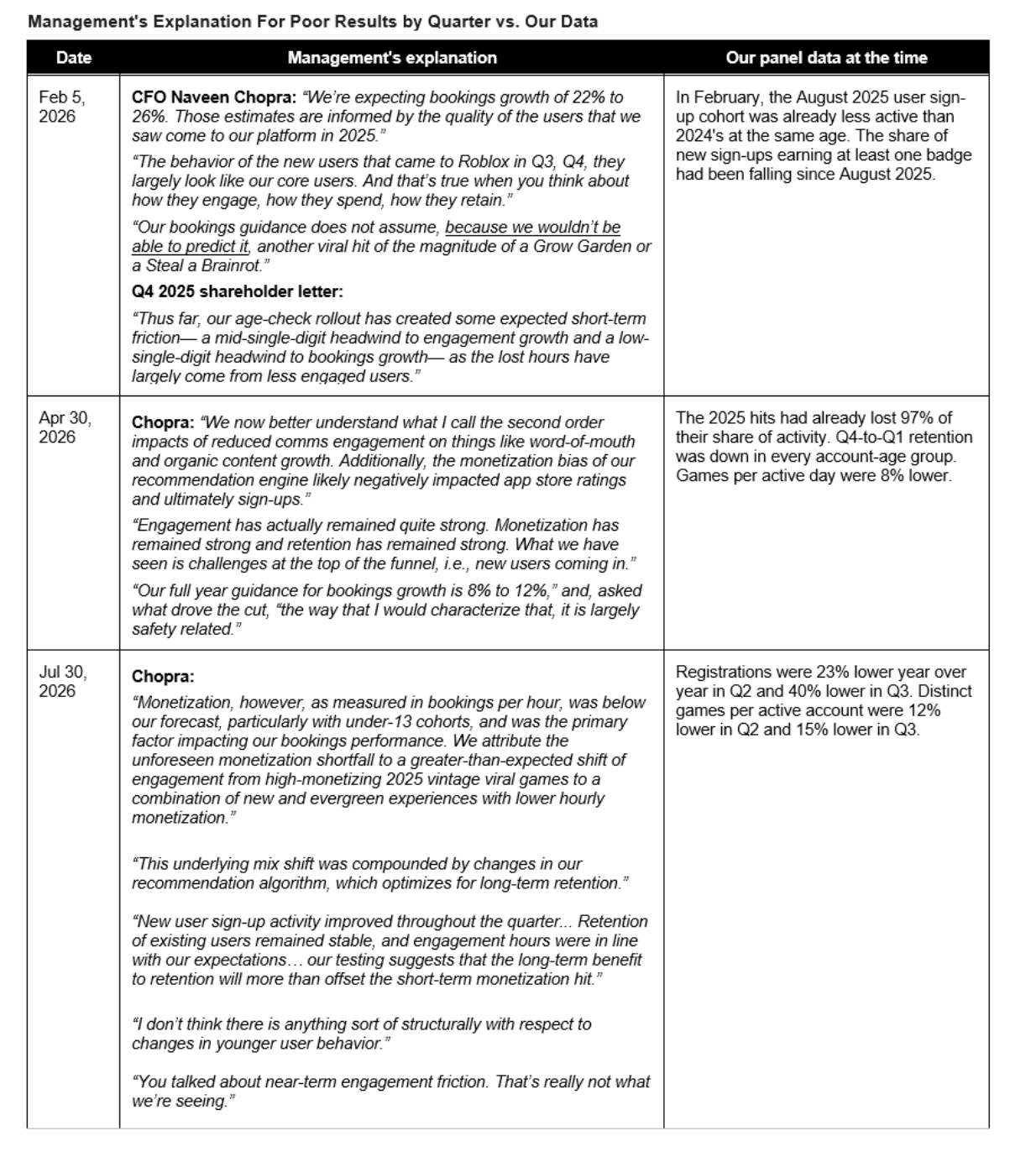
Despite the fundamental deficiency stemming from today’s less viral Roblox, management has continued to blame transitory factors for platform weakness in what we believe ranges from distortion of underlying data to flat-out lies.
In February 2026, Roblox management was keen to point the finger at age checks in the short term, but still implied there would be a near-dated recovery, saying that 2025 users “largely look like our core users.” We found in our data that 2025 cohort users were instead distinctly less active, and believe Roblox was not forthcoming about its own user quality degradation.
In April, after cutting guidance, management blamed age checks once again, but the company also trotted out excessive monetization focus as another supposedly transitory performance detractor. The already-implemented fix at the time was an emphasis on retention in the discovery algorithm, with management contending that monetization-centric gameplay had disrupted app store ratings and thus sign-ups. We believe RBLX was keen to find a scapegoat for poor results and user growth was distinct from its unalterable safety changes.
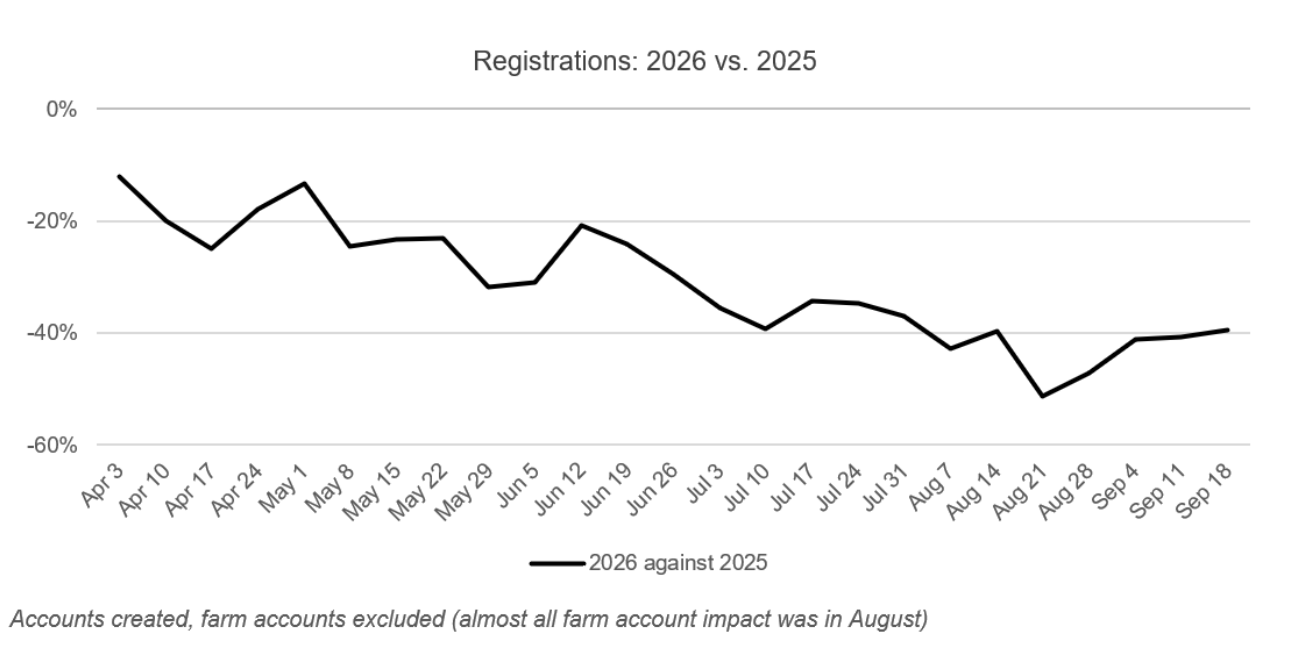
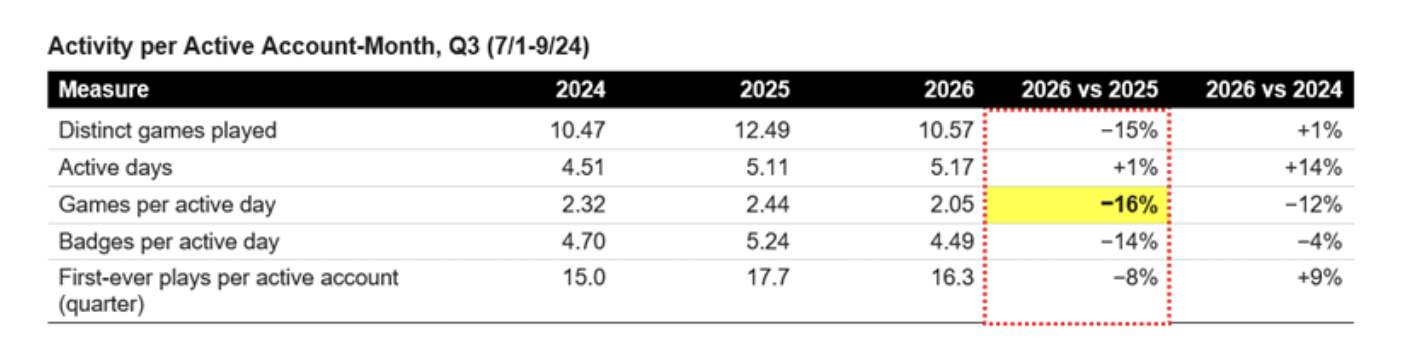
In July, management switched the other direction, pinning younger users’ poor monetization on the retention-focused algorithm while implying sign-ups had improved, engagement was stable, and the retention focus would eventually pay off. Per our data, which is derived from Roblox’s account sign-up history, sign-ups were down 23% YoY in Q2 and fell further to down 40% YoY in Q3, while distinct games per active account decreased 12% YoY in Q2 and 15% YoY in Q3. We find it hard to believe that management could credibly portray such trends as stable engagement and improved sign-ups.
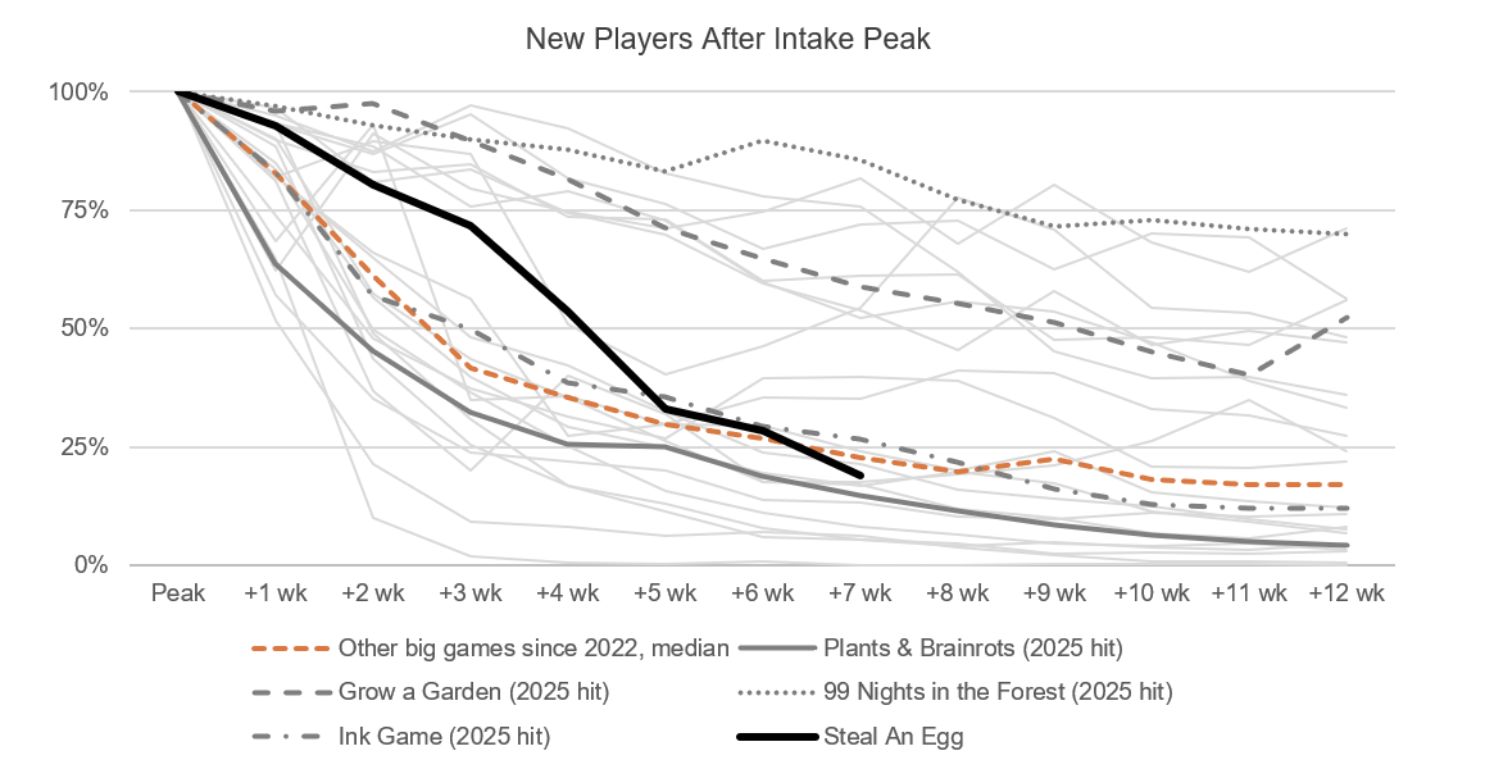
On August 20, management moved the recommendation algorithm back toward monetization in a blog post announcement. We take this as an indication that the platform retention drive focus was not working. Some champions of the stock interpreted this to mean a new viral wave was in the offing, as the hit Steal An Egg took off at the same time. However, even with the algorithm change in its favor, Steal An Egg has already shed new users faster than the median Roblox hit, as we show later. We believe this lack of viral stickiness is because the Roblox platform has fundamentally become slower, with a more stale user base. We discuss our findings further in the next section.
Below is a summary of year-to-date public walk-backs and position changes from Roblox, and their contrast with our data derived from Roblox’s API, which we believe to be representative.
Data from 6.7mn Accounts Through Mid-October Suggests Roblox Virality Is Structurally Impaired
We found a pattern of continued decline in Roblox game virality throughout 2026, extending through mid-October. This year’s platform hits were comparatively short-lived and could not match past viral successes, and it doesn’t appear to us that this trend will reverse.
A game can become a hit through on-platform discovery via Roblox’s system of personalized home-page recommendations lists, search, and charts; its growth can also be social, as players join games their friends are playing and talk about games on and off the platform; finally, plays can come from ads and other off-platform channels. When discovery puts a small game in front of a large audience and friends pull each other in, the game can grow very fast, and Roblox calls such games viral hits. Hits also bring new users to the platform, because people sign up to play a trending game with their friends.
2025 was dominated by such hits. Grow a Garden, Steal a Brainrot and 99 Nights in the Forest each drew tens of millions of players. The platform reached a record 47.4 million concurrent users in August 2025, and Steal a Brainrot alone peaked at 25.4 million concurrent players in October. DAU rose from 79.5 million in the second quarter of 2024 to 151.5 million in the third quarter of 2025, and bookings grew 55% to $6.8 billion for the year. As the hits faded, DAU fell to 144 million in the fourth quarter of 2025, 132 million in the first quarter of 2026 and 123 million in the second.
Methodology: Accounts
We measured Roblox’s ability to attract new users using data collected from 6.7 million accounts using the Roblox API. From September 26 to October 19, 2026, we sampled 1.5 million randomly selected seed accounts and their 5.2 million friends. Accounts in our sample were created from 2022 to 2026.
We use in-game badges to track user behavior. Most games award a welcome badge on a player's first visit, and many award further badges for achievements. Each award is stored in the player's inventory with a timestamp precise to fractions of a second. Inventories can be viewed by anyone unless the account holder makes them private. A badge award is direct evidence that an account was in a specific game at a specific time, which is why we use badges to measure play. The majority of hit games in our sample use badges, making them a useful tool for measuring new-user spread and activity.
3.5 million of the 6.7 million accounts had acquired badges and had set them to display publicly, forming our study population. These consist of roughly 550,000 seed accounts and 2.95mn of their friends. For each account in the population, we recorded its creation timestamp, every visible badge with its exact award time, and its full friend list, together with the badges of friends whose inventories were visible. We mapped 244,329 badges across 63,844 games.
Our seed accounts were drawn evenly across 2022-2026 creation dates with the same overall relative account creation frequency as those years. Of the 550,000 seed accounts, totals by creation date were as follows:
2022: 67,000
2023: 86,000
2024: 114,000
2025: 189,000
2026: 95,000 through late September
Quantifying Farm Bot Accounts
We exclude “farm” bot accounts designed only to get items for existing players from our sign-up, activity, and concentration measures. Unbanned farm bot accounts were particularly prevalent in August 2026, comprising 8% of total active panel accounts, even after 13% of account IDs we analyzed in August came up empty, implying they were already banned or deleted. That suggests up to 21% of accounts created in August were bots, both ones that were banned and those missed by Roblox. We identified these accounts through the following identifiers:
all farm accounts had no friends;
all only possessed badges from the game Murder Mystery 2, which is popular for farming;
all had the game’s Level 10 badge needed for trading items;
virtually all took no less than an hour to earn their first badge, whereas roughly half of “normal” accounts earned their first badge within ten minutes of account creation;
and they were created at all hours of the day and night, versus a more regular creation cadence for real accounts.
Certain accounts active in the start of 2026 and still present at the outset of our study that matched the above identifiers had been banned by Roblox by the end of the collection period, corroborating our methodology.
New Platform Restrictions Appear to Have Caused Structural ~50% Decline in Social Game Spread
Safety-related measures have had a distinct negative effect on virality this year that we estimate to be a roughly 50% YoY decline. Contrary to narrow interpretations of peak concurrent user data, that pressure does not appear to be reversing meaningfully.
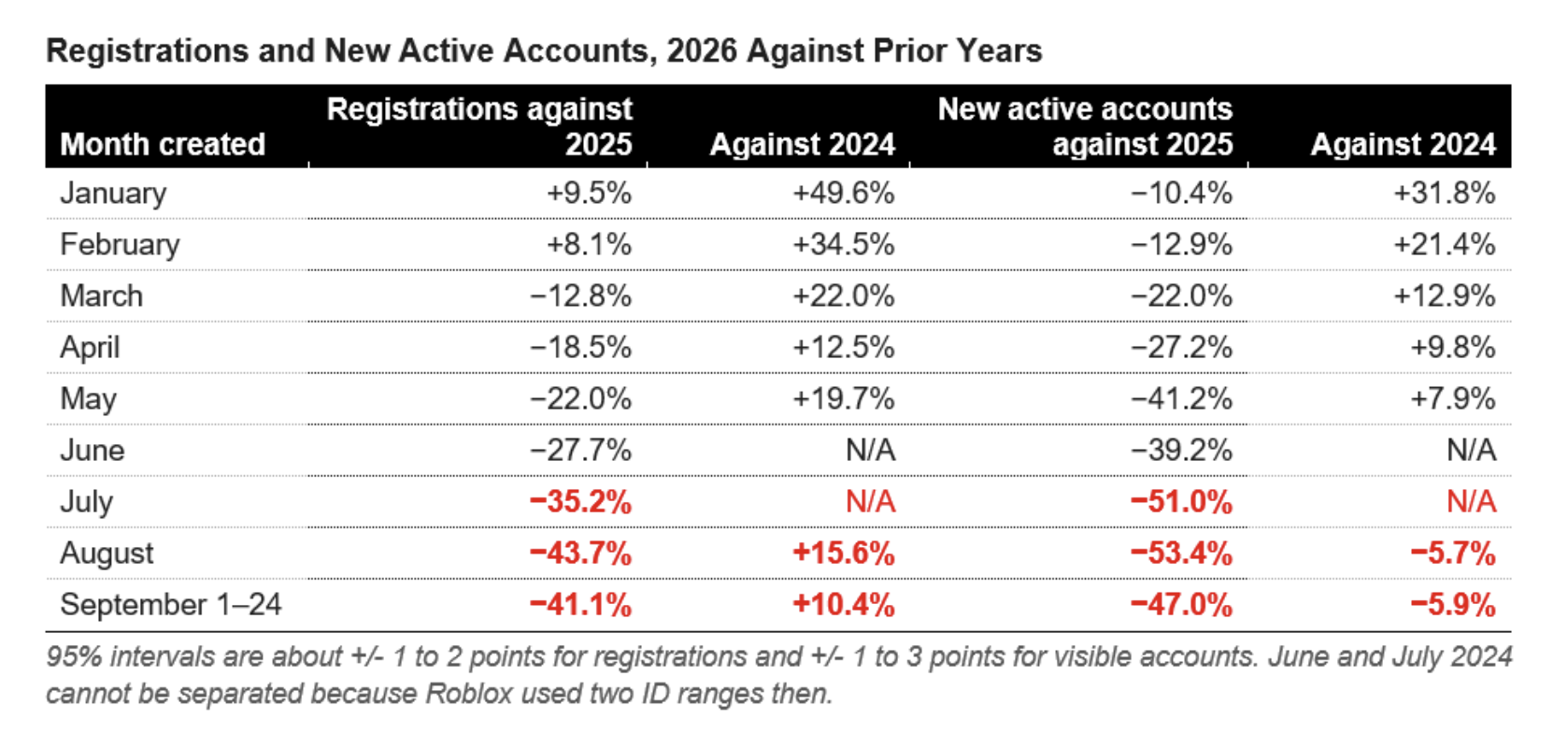
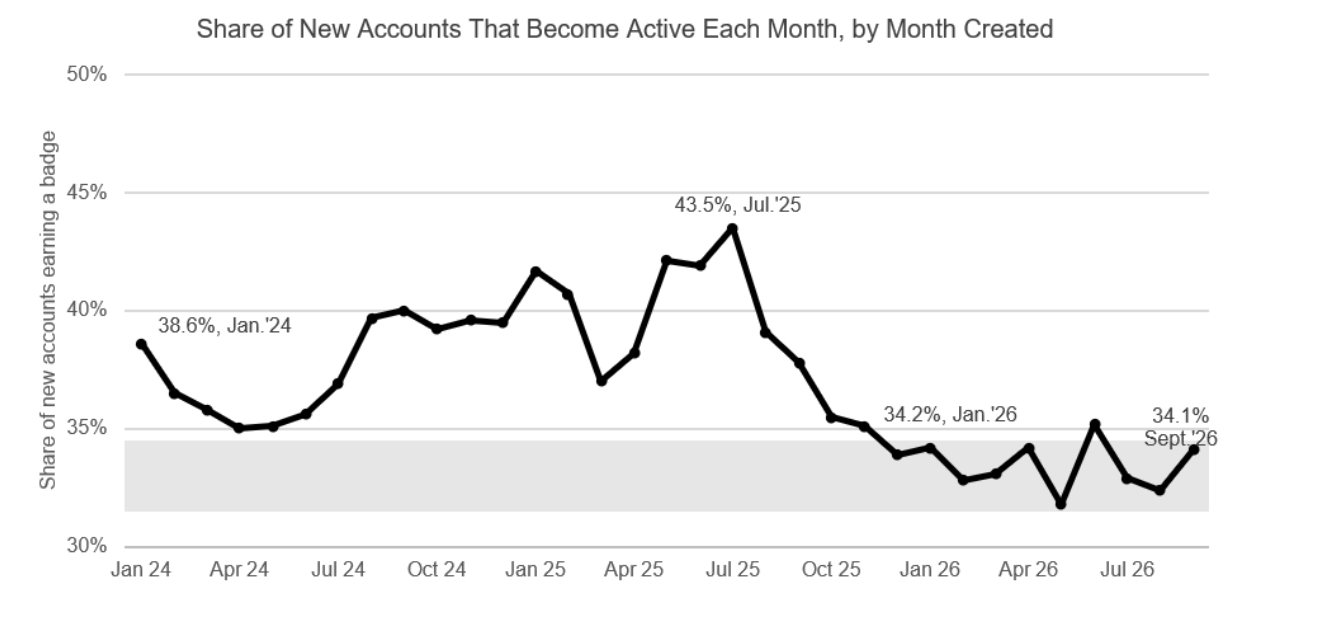
According to our study, new active accounts, defined as those that went on to earn badges, were down about 50% across Q3, without a significant let-up in September. In fact, September 2026 fared just as poorly for new active account totals vs. 2024 as August did. Registrations in our study population also fell roughly 40% throughout Q3, again with little reversal as the quarter went on:
Methodology: Active Accounts, Adoptions, and Launch Dates
The basic event in our panel is a badge award. An account is active on a day if it earned at least one badge that day, and active in a month or quarter if it was active on at least one day within it. Activity totals are sums of active account-days. Because collection began on September 26, September is truncated to days 1 to 24 in every year, and third quarters for purposes of the study run from July 1 to September 24 in all years. Year-over-year comparisons cover the same calendar days. Account age is measured from the profile creation timestamp.
For each game, we identify a join badge as the badge whose names indicate a first visit, such as “welcome”, “joined”, “first time”, “first visit”, “thanks for playing”, or ”you played”. Where a game has no such badge, its most-awarded badge stands in. An account's first-ever play of a game, which we call an adoption, is the earliest award of that game's join badge to the account. A game's launch date is approximated by the creation date of its join badge, and a game counts as new in a period if it launched within the prior 183 days. The 2025 hits we tally are Grow a Garden, Steal a Brainrot, 99 Nights in the Forest, Plants vs Brainrots and Ink Game. Since Steal a Brainrot has no badges, it does not contribute to badge-based measures. We note that inclusion of Steal a Brainrot would have made 2026’s virality declines look even more pronounced than they already are compared to 2025.
Summer 2026’s Hits Did Not Drive User Growth
A game called Steal An Egg was the viral hit of the summer. However, Steal An Egg was not able to replicate the success of past viral hits, which grew primarily from new Roblox users. Compared to last year’s hits Grow a Garden and 99 Nights in the Forest, Steal An Egg drew 20 percentage points fewer of its audience from newcomer accounts, per our panel:
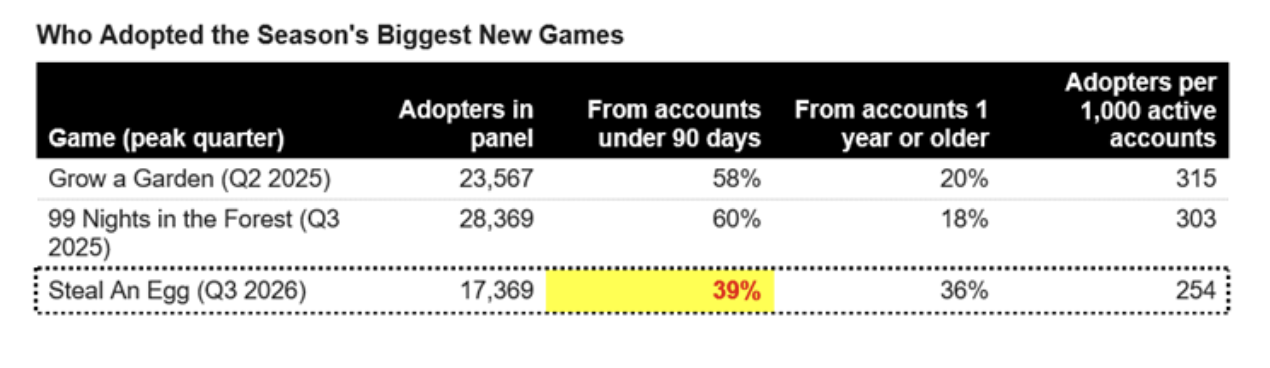
Steal An Egg was unable to offset the decline in Roblox user sign-ups meaningfully, either: our panel data showed sign-ups remained down 41% in September. We view Roblox games’ shift toward harvesting the existing user base as indication of an increasingly stale platform.
We interviewed an individual at the developer operating Steal An Egg, Do Big Studios, in mid-October. The individual corroborated this trend and noted that Steal An Egg is also losing momentum:
“We think about it as like a lot of the players that left from Steal a Brain Rot and Grow a Garden dying, effectively. They came back for Steal An Egg… now they’re starting to, like, fall off a little bit.”
Even in Steal An Egg’s peak month, September, newly active users, meaning badge-earning new users, in our panel stayed within the band in place since age restrictions began in January:
Similarly, user registrations on the week of September 18 remained in decline, depressed below July levels, showing Steal An Egg was not drawing new users to Roblox:
Steal An Egg has fizzled after an early strong launch. 7 weeks after its peak new user week, Steal An Egg was only at 19% of peak new user visits, falling behind the median decay of hit games since 2022 and several notable 2025 hits:
There is a Broader Anemic Userbase Issue at Roblox
As the staleness of the player base goes up, their propensity to play is going down. Per our data set, games played per account in Q3 declined against both 2025 and 2024:
The restrictions for new games to 16+ verified users that began mid-June have also hurt new-game discovery at Roblox, with newer, typically younger, accounts drastically less likely to try new games than they were before the change:
Retention, defined here as players in our panel who came back to earn more badges the next quarter, also fell as the viral waves subsided. This happened equally among new and older accounts alike:

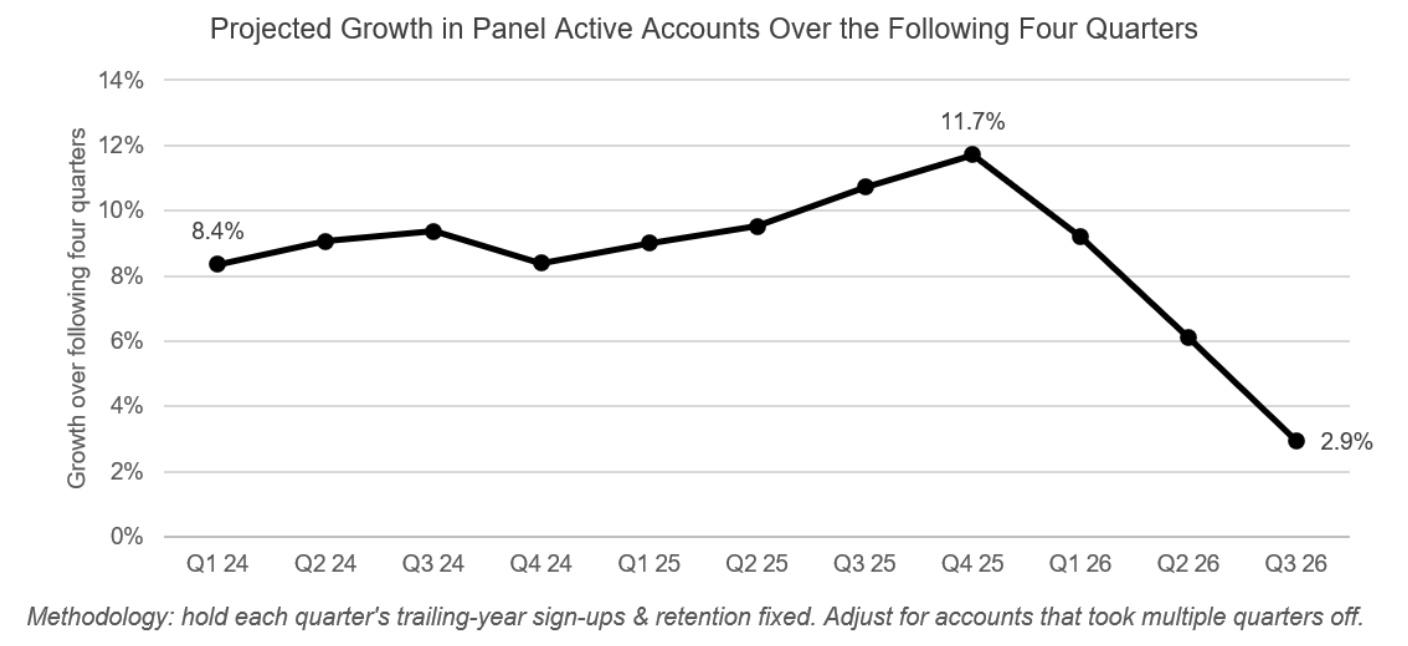
Continued erosion in 2026 YTD sign-ups and play in our panel data meant that as of Q3 2026, projected 1-year active Roblox account growth sits at a multiyear low:
Roblox Developers Expressed Skepticism About Company Direction and Growth Areas
Roblox’s developer conference (RDC 26) took place in San Jose in mid-September. The Monday after the event, Roblox shares surged 13%, with several analysts bringing numbers and estimates up after the developer conference. A Wells Fargo note argued that “the business has bottomed.” We attended the conference, and game developers we spoke to did not share the optimism that Roblox and the sell-side is showing for a recovery.
Over two days, our investigators spoke with over a dozen developers, from solo builders to top-50 studios. The conversations were unstructured, and quotes have been lightly edited for clarity. The largest studios seem to be doing well and expect to continue to do so, as is to be expected in a power-law ecosystem, while smaller developers described rising costs, falling payouts, and a platform that no longer works for them, which suggests the long tail of studios is less sure of the potential for breakout hits.
One developer described sales as stable, but the cost of getting users into their games as elevated: “Revenue hasn’t dropped, but the cost of a player acquisition has definitely gone up.” This aligns with our findings that new player sign-ups have slowed significantly.
Describing the restrictions on in-game communication, another developer told us that “chat was one of the natural channels in which players were pulling their in-game friends into our game. When they made that harder, it changed the intro path.” Across the conversations, developers described promotion-driven growth that must increasingly come from paid channels rather than organic ones.
It appears the safety reset has caused developers to try and replace the friend-to-friend spread of games within Roblox with paid promotion outside it. For a larger studio with a marketing budget, that is tenable, but for a smaller studio, it is much more difficult. One developer who speaks to the team behind the popular, young-leaning Brookhaven RP game told us that Brookhaven’s chat communications went down 96% as a result of the changes.
Regarding the safety changes, we asked developers if they see players in their games who obviously aren’t the age their account says. One laughed and said the problem had gotten worse this year. Another said, “if you join a regular Roblox lobby, at least half the people will sound like they are ten years old.”
An executive at a top-five studio told us in a separate interview, “The unit economics don't make it affordable for us to go out and promote our games on TikTok or whatnot… There's really a case to be made that we're generating so much cash that we could do that, but the ROI, the ROAS just is not there, right? It's too expensive to go and acquire a user onto the platform.”
Developers also expressed concern about Roblox’s AI competitiveness, cost-effectiveness, and the feasibility of its new emphasis on18+ gaming.
A second top-five studio executive opined in a separate interview that Roblox’s AI tools were subpar and directed at building investor hype. “I think a lot of their on-platform AI tools are redundant or useless because you can just basically get a Claude or ChatGPT subscription and get all of the value that you would out of whatever their internal stuff is. So a lot of Roblox’s AI tooling and stuff I think is more gimmicky as they’re trying to appeal to investors, maybe… the specific tech demos they showed us at RDC were like worse, shittier versions of [Nvidia] DLSS 5.”
The first top-five studio executive questioned the economics of Roblox’s AI product suite against the platform’s limited profitability. “The financial profile of Roblox is somewhat concerning. Obviously they’re leaning into AI… every time you prompt something, it costs them money. The big sell to the market [before] was ‘our margins are going to expand once we’ve established the infrastructure to be able to host these massive games.’ That happened. But now all of a sudden they’re saying, well, we’re going AI-native and you’re gonna be able to prompt this and prompt that… Well, who’s paying for that? Whose margin is that coming out of? Is that coming out of your margin, Roblox? You’re not making a whole lot of money here.”
The second top-five studio executive stated that Roblox’s 18+ push is unlikely to broaden the appeal to a new type of gamer. “I don’t think they’ll engage people who haven’t already. You’ve got a really established niche of people who are like 18-50 who have been on Steam for quite a few years, and they’ll probably continue to kind of hold their nose at Roblox. Is it going to open the market for people who have like... been PC gamers or Xbox or PlayStation gamers for a long time? Probably not.”
The bottom line is that last year’s biggest hit, Grow A Garden, the mega-viral game that has impacted Roblox comps this year, was built by an independent sixteen year old in three days. These are exactly the kind of creators and games that appear unlikely to succeed as a result of the changes to the platform.
Terms of Use
Use of reports prepared by Bleecker Street Research LLC (“BSR”) and this website is subject to and governed by the below Terms of Use (the “Terms”). The Terms govern all reports published by BSR (each a “BSR Report”) and supersede any prior Terms of Use governing the access and use of this website and BSR Reports, which you may download from this website. By downloading, accessing, or viewing any materials on this website, you hereby agree to the following Terms.
Bleecker Street and Its Related Parties
BSR is under common control and affiliated with Bleecker Street Capital LLC (“BSC”), Bleecker Street Capital Management LLC (“BSCM”), and affiliated funds, including but not limited to Bleecker Street Minerva LP (“Minerva”) and Bleecker Street Partners LP (“BSP”) (collectively, BSC, BSCM, and affiliated funds, including Minerva and BSP, are referred to herein as “BSC”). BSR is an online research publication that produces due diligence-based reports on publicly traded securities, and BSC and BSCM are investment advisers registered with the U.S. Securities and Exchange Commission. The reports on this website are the property of BSR. BSR and BSC, collectively with their respective affiliates and related parties, including, but not limited to any principals, officers, directors, employees, members, clients, investors, consultants and agents, are referred herein to as “Bleecker Street”, “us”, or “we”.
BSR is a for-profit journalistic organization that researches and provides opinion journalism about issues of concern to the general public, including about the securities of public issuers. BSR finances its journalism through a non-traditional revenue model where it earns revenue from positions that BSC takes in the securities of issuers on which BSR reports. This business model requires Bleecker Street to take material financial risk, which our partners have exposure to. To manage risk, we must close open positions as we deem prudent. We do not provide “price targets” for securities, although we may express our subjective opinion of the value of a security, which differs from a price target in that we neither know nor claim to know how the market might value such security. We therefore typically do not hold, and provide no assurance that we will hold, a position in a reported-on security until it reaches a price target, nor do we necessarily hold, or provide any assurance that we will hold, positions in securities until such securities reach the price that reflects our opinion of value. Many factors enter into investment decisions aside from opinions of the value of the security, including without limitation, borrow cost, “short squeeze” potential, risk sizing relative to capital and volatility, reduced information asymmetry, the opportunity cost of capital, client expectations, the ability to hedge market risk, our perception of the efficacy of market regulators and gatekeepers, our perception of the resource imbalance between us and any Covered Issuer (defined below), and our subjective perceptions. Therefore, you should assume that upon publication of a report, we will, or have begun to, close a substantial portion – possibly the entirety – of our positions in the Covered Issuer’s securities.
Reports Are Solely Attributable to BSR
The BSR Reports on this website are opinion journalism. On this website and through the BSR Reports, BSR is providing its journalistic opinions about issues of concern to the general public. You understand and agree that the opinions, information, and reports set forth on this website are attributable only to BSR, which bears sole responsibility for the information on this website and content of the BSR Reports; provided, however, that persons affiliated with Bleecker Street have provided BSR with publicly available information that BSR has included in the BSR Reports and on this website, following BSR’s independent due diligence.
Website and Report Use Is at Your Own Risk
Any and all use of BSR’s research and BSR Reports is entirely at your own risk. Neither BSR nor BSC is liable for any losses or damages you may incur as a result of your use of this website, including but not limited to any direct or indirect trading losses you may incur as a result of any information on this website, any BSR research, or any BSR Report. You agree to do your own research and due diligence with respect to any information on this website, and to consult your own financial, legal, and tax advisors before making any investment decision with respect to transacting in any securities of an issuer discussed on this website (a “Covered Issuer”).
BSC’s Trading Practices and Positioning with Respect to Covered Issuers
As of the time and date of each report, BSC (defined above) is short the securities of, or derivatives linked to, the securities of the Covered Issuer, unless otherwise stated in the report. BSC therefore will realize significant gains in the event that the prices of a Covered Issuer’s securities decline. Upon the publication of each report, we may cover, and typically will cover, a substantial majority of our short positions. BSC’s covering its short positions upon the publication of a report is not a reflection of a lack of conviction in any opinions or the facts presented on this website or in any BSR Report. Rather, the act of covering BSC’s short positions upon the publication of a BSR Report is intended solely to manage risk in a prudent manner, consistent with the obligations of a fiduciary of our investors’ money. BSC is likely to continue transacting in the securities of the Covered Issuer for an indefinite period after a report on a Covered Issuer, and we may hold net short, net long or neutral positions in the Covered Issuer’s securities after the initial publication of a report, regardless of our initial position and views herein.
Notice to UK Residents
If you are in the United Kingdom, you confirm that you are accessing research and materials as or on behalf of: (a) an investment professional falling within Article 19 of the Financial Services and Markets Act 2000 (Financial Promotion) Order 2005 (the “FPO”); or (b) high net worth entity falling within Article 49 of the FPO (each a “Permitted Recipient”). In relation to the United Kingdom, the research and materials on this website are being issued only to, and are directed only at, persons who are Permitted Recipients and, without prejudice to any other restrictions or warnings set out in these Terms of Use, persons who are not Permitted Recipients must not act or rely on the information contained in any of the research or materials on this website.
No Recommendation or Solicitation; No Warranties
All information and opinions on this website and in BSR Reports are for informational purposes only. You understand and agree that no information on this website or in any BSR Report is investment advice or a recommendation or solicitation to buy or sell securities. In any given BSR Report, BSR is solely articulating its reasons at the time of publication for the positions it may have in the securities of a Covered Issuer. To the best of BSR’s ability and belief, all information contained herein is accurate and reliable, and has been obtained from public sources we believe to be accurate and reliable, and who are not insiders or connected persons of the securities of a Covered Issuer or who may otherwise owe any fiduciary duty or duty of confidentiality to the Covered Issuer. However, such information is presented “as is,” without warranty of any kind, whether express or implied. BSR makes no representation, express or implied, as to the accuracy, timeliness, or completeness of any such information or with regard to the results to be obtained from its use. Research may contain forward-looking statements, estimates, projections, and opinions with respect to among other things, certain accounting, legal, and regulatory issues the issuer faces and the potential impact of those issues on its future business, financial condition, and results of operations, as well as more generally, the issuer’s anticipated operating performance, access to capital markets, market conditions, assets, and liabilities. Such statements, estimates, projections, and opinions may prove to be substantially inaccurate and are inherently subject to significant risks and uncertainties beyond BSR’s control. All expressions of opinion are subject to change without notice, and BSR does not commit to update or supplement any BSR Report or any of the information contained therein.
All Materials Copyrighted; Permitted Sharing
The information on this website, including but not limited to BSR Reports, is copyrighted and the intellectual property of BSR. You agree not to distribute any of the information on this website, whether as a downloaded file, a copy, an image, a reproduction, or a hyperlink to such file, in any manner other than by providing the following hyperlink: bleeckerstreetresearch.com. If you have obtained research published by BSR in any manner other than by downloading a file from the foregoing link, you hereby are on notice of these Terms, agree to these Terms, and agree not to use such research in a manner inconsistent with these Terms.
You further agree that you will not communicate or distribute the contents of BSR Reports and any other information on this site to any other person unless that person has agreed in writing to be bound by these Terms. You understand and agree that if you access this website, download or receive the contents of BSR Reports or other materials on this website as an agent for any other person, you are binding your principal to these Terms.
Limitation of Liability; No Special Damages
Bleecker Street shall not be liable for any claims, losses, costs, or damages of any kind, including direct, indirect, punitive, exemplary, incidental, special or consequential damages, arising out of or in any way connected with this website or the BSR Reports. This limitation of liability applies regardless of any negligence or gross negligence of Bleecker Street. You accept all risks in relying on the information and opinions in any report on this website.
Governing Law; Jurisdiction; Arbitration
You agree that any dispute between you and Bleecker Street arising from or related to these Terms, the information on this website, or any BSR Report shall be governed by the laws of the State of New York, without regard to any conflict of law provisions. You knowingly and independently agree to submit to the personal and exclusive jurisdiction of the state and federal courts located in New York, New York and waive your right to any other jurisdiction or applicable law. You agree that any dispute between you and Bleecker Street arising from or related to these Terms, the information on this website, or any BSR Report shall be brought exclusively in binding arbitration conducted in New York, New York by JAMS, before a single arbitrator, under the applicable JAMS rules. You agree that you waive the right to a trial by jury in any action or proceeding in any jurisdiction between you and Bleecker Street.
No Waiver; Validity
The failure of Bleecker Street Research LLC to exercise or enforce any right or provision of these Terms of Use shall not constitute a waiver of this right or provision. If any provision of these Terms of Use is found by a court of competent jurisdiction to be invalid, the parties nevertheless agree that the court should endeavor to give effect to the parties’ intentions as reflected in the provision and rule that the other provisions of these Terms of Use remain in full force and effect, in particular as to the foregoing governing law and jurisdiction provision.
One-Year Limitations Period
You agree that regardless of any statute or law to the contrary, any claim or cause of action arising out of or related to the use of this website or the material herein must be filed within one year after such claim or cause of action arose or be forever barred.